
3D Outpost Architecture
Every primary architectural structure and habitat interior in PHOBOSIA was modeled from scratch in Blender specifically for this project. Explore the pressurized pods, command hubs, and planetary exploration craft.
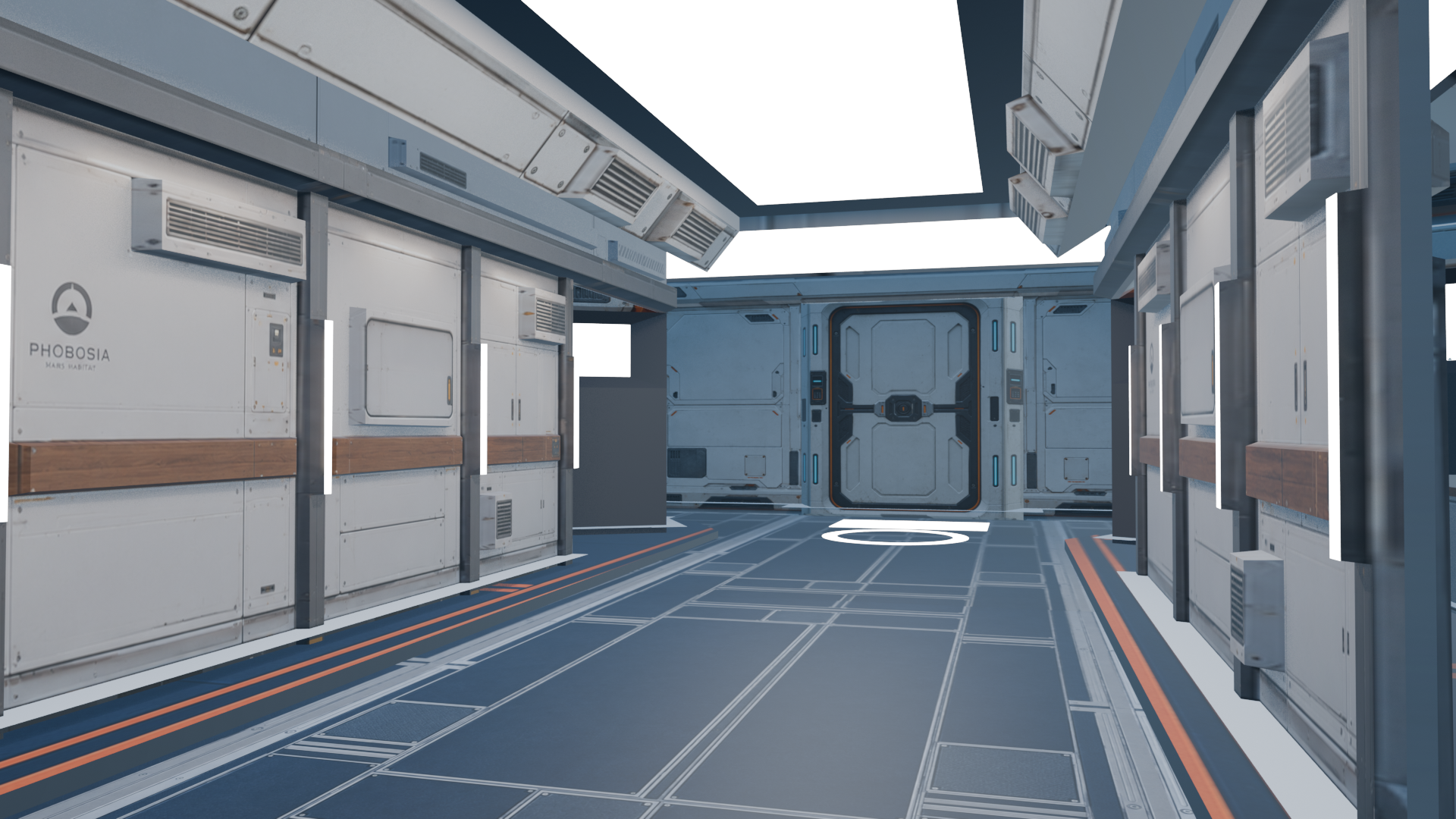
Mission Control Command Center
The central nervous system of PHOBOSIA Outpost
The primary nerve center housing multi-display telemetry banks, global orbital tracking projections, atmospheric telemetry readers, and long-range communication relays. Operators coordinate all outpost functions, communications, and emergency protocols from this pressurized hub.
Outpost Role: Expedition coordination, telemetry monitoring, mission logging, and communications uplink.
Expedition Relevance: Active across all SOLs (1–11); central to SOL 2 readiness, SOL 7 storm alert, and SOL 11 final log entry.
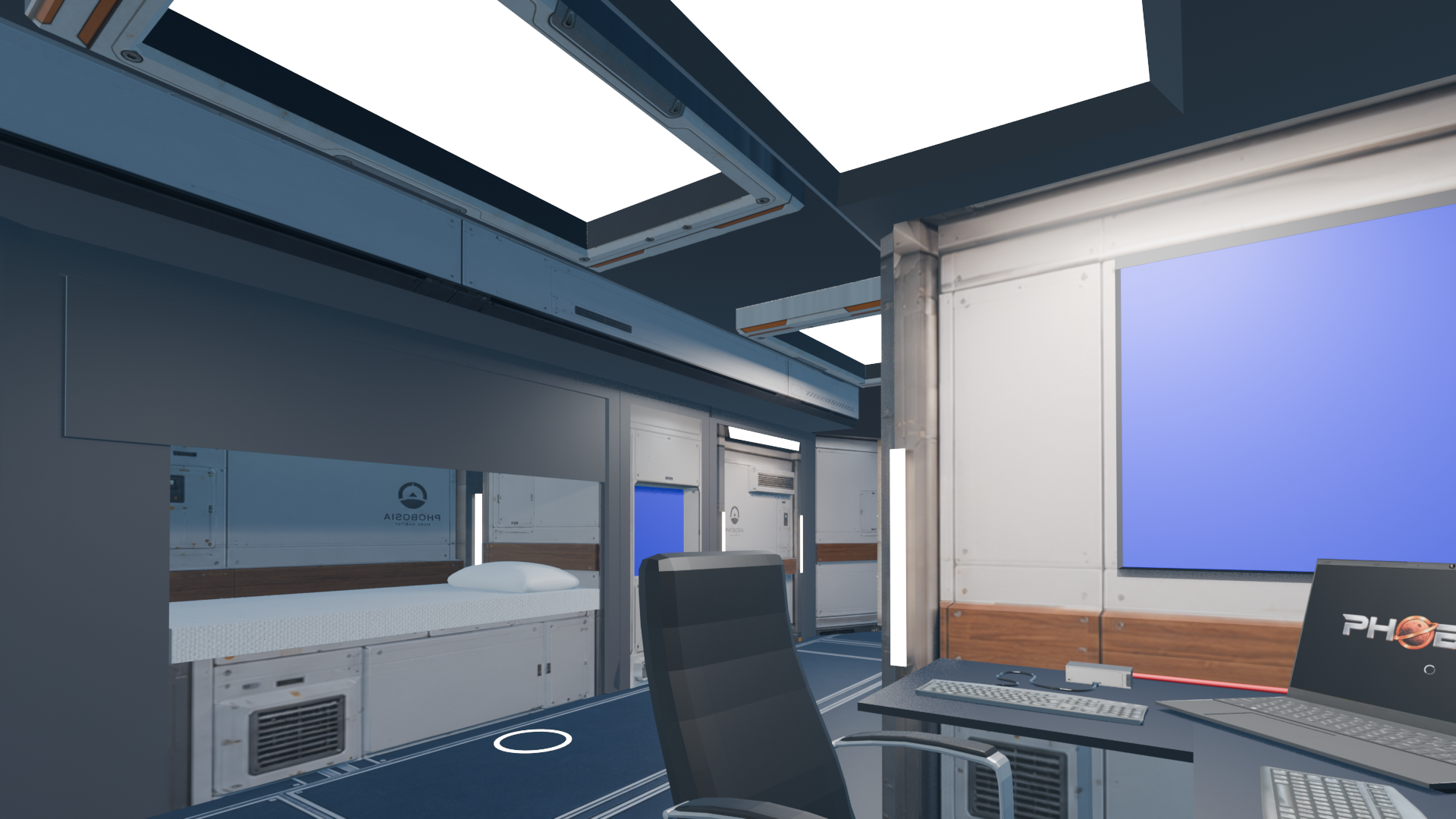
Crew Habitat Quarters
Ergonomic pressurized living environment for Martian endurance
The main residential sanctuary for the explorer, engineered to protect psychological well-being and physical health on Mars. Houses sleeping pods, nutrition dispensing systems, medical diagnostics, water recycling taps, and Carl's personal computing terminal.
Outpost Role: Crew habitation, rest cycles, nutrition/water provisioning, and personal expedition journal maintenance.
Expedition Relevance: SOL 1 orientation spawn point, SOL 2 habitat verification, and daily expedition rest cycles.
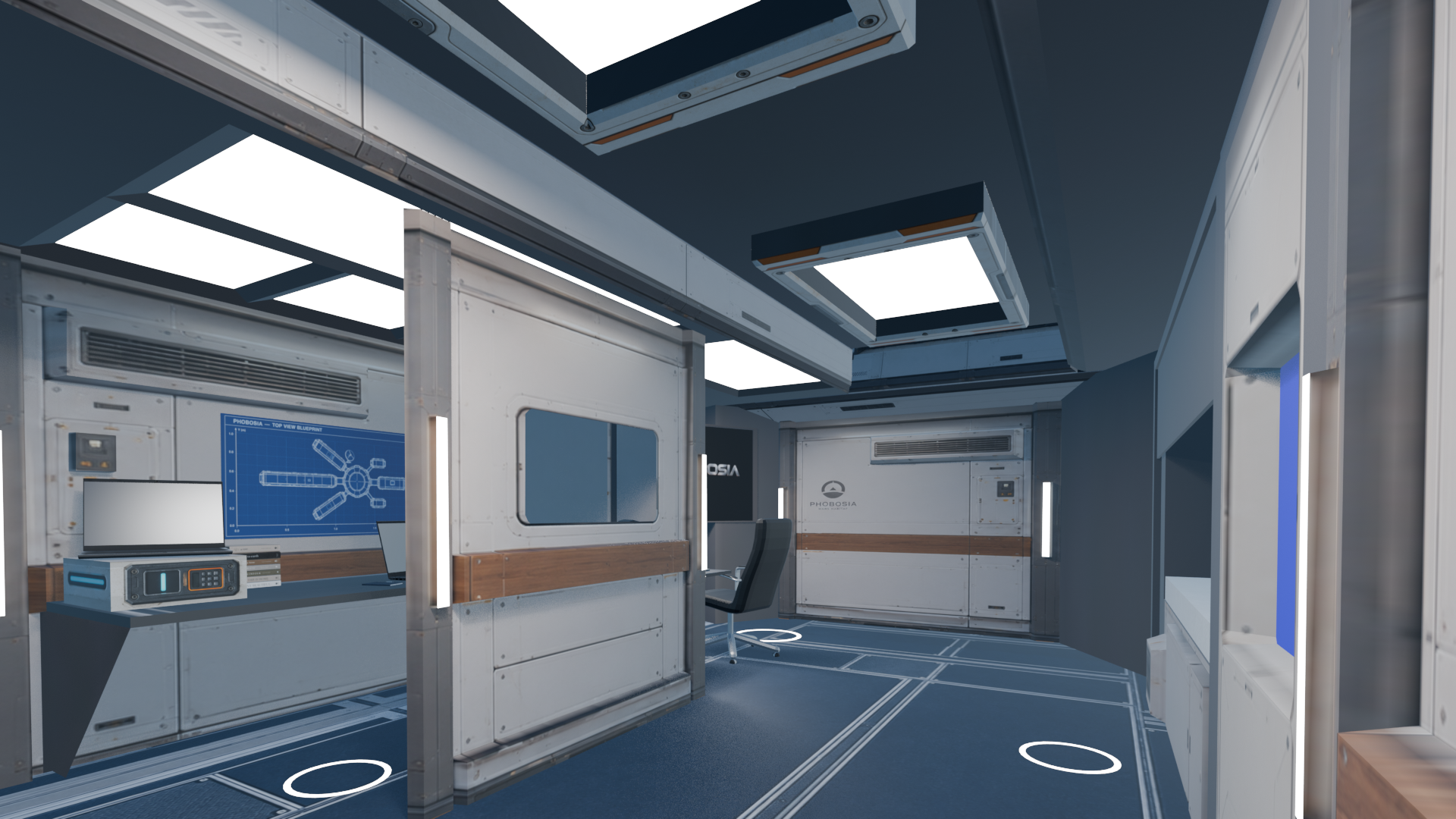
Habitat Workstation & Galley
Dedicated workstation and crew preparation area
An interior perspective of the Habitat module highlighting the crew desk, technical logbooks, nutrition distribution console, and environmental readouts.
Outpost Role: Personal study, daily routine logging, and crew nourishment preparation.
Expedition Relevance: SOL 1 base onboarding and SOL 9 life-support balance assessment.
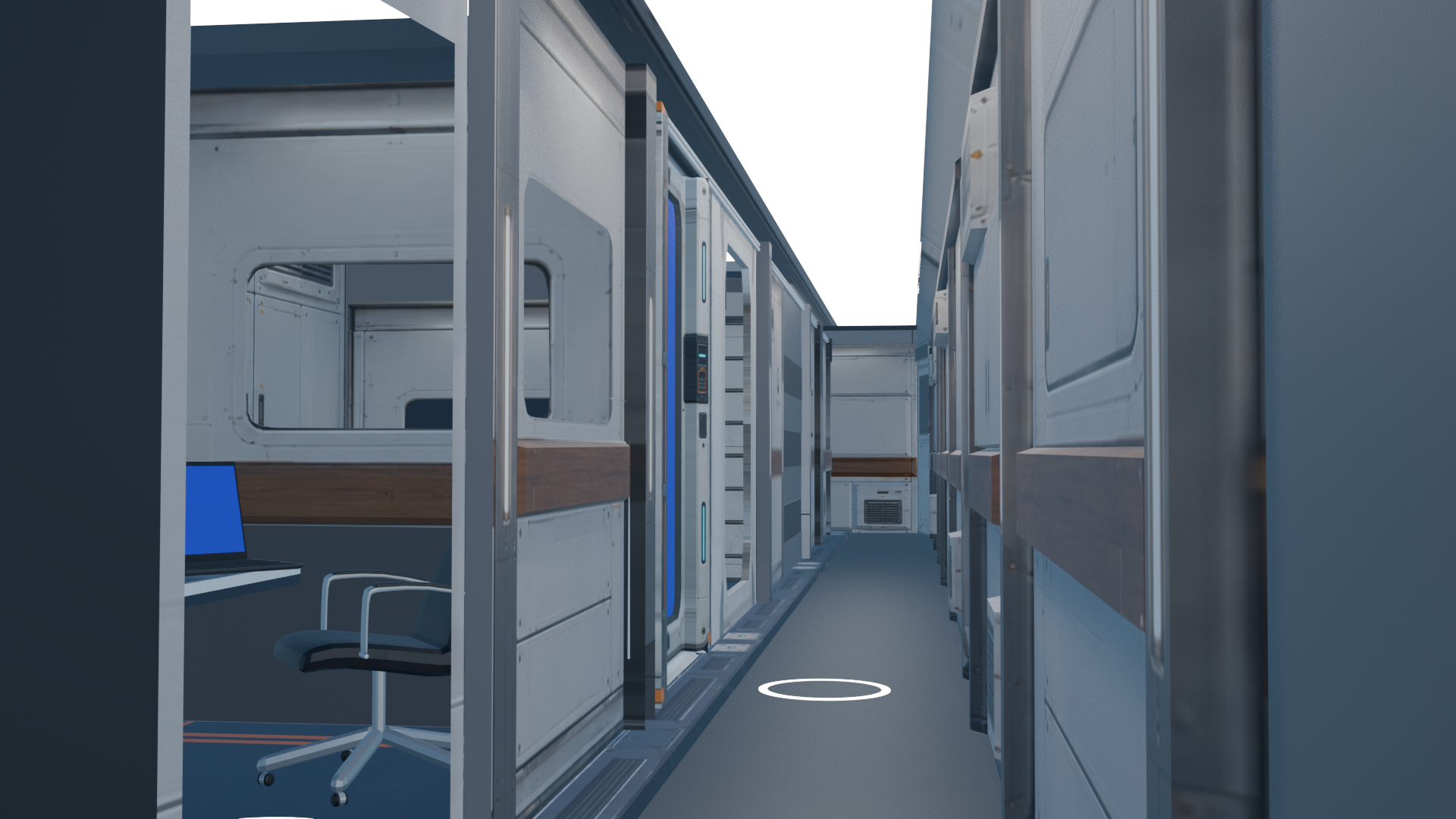
Research & Cultivation Science Lab
Planetary geology analysis and dual hydroponic plant cultivation
Equipped for rigorous planetary observation, geological sample analysis, and closed-loop biological cultivation. Contains twin pressurized botanical growth tubes, mass spectrometers, centrifuge equipment, and high-resolution microscopes for Martian regolith examination.
Outpost Role: Soil sample analysis, botanical growth monitoring, and geological target evaluation.
Expedition Relevance: Core facility for SOL 3 target selection, SOL 6 EVA sample analysis, and SOL 9 cultivation recovery.
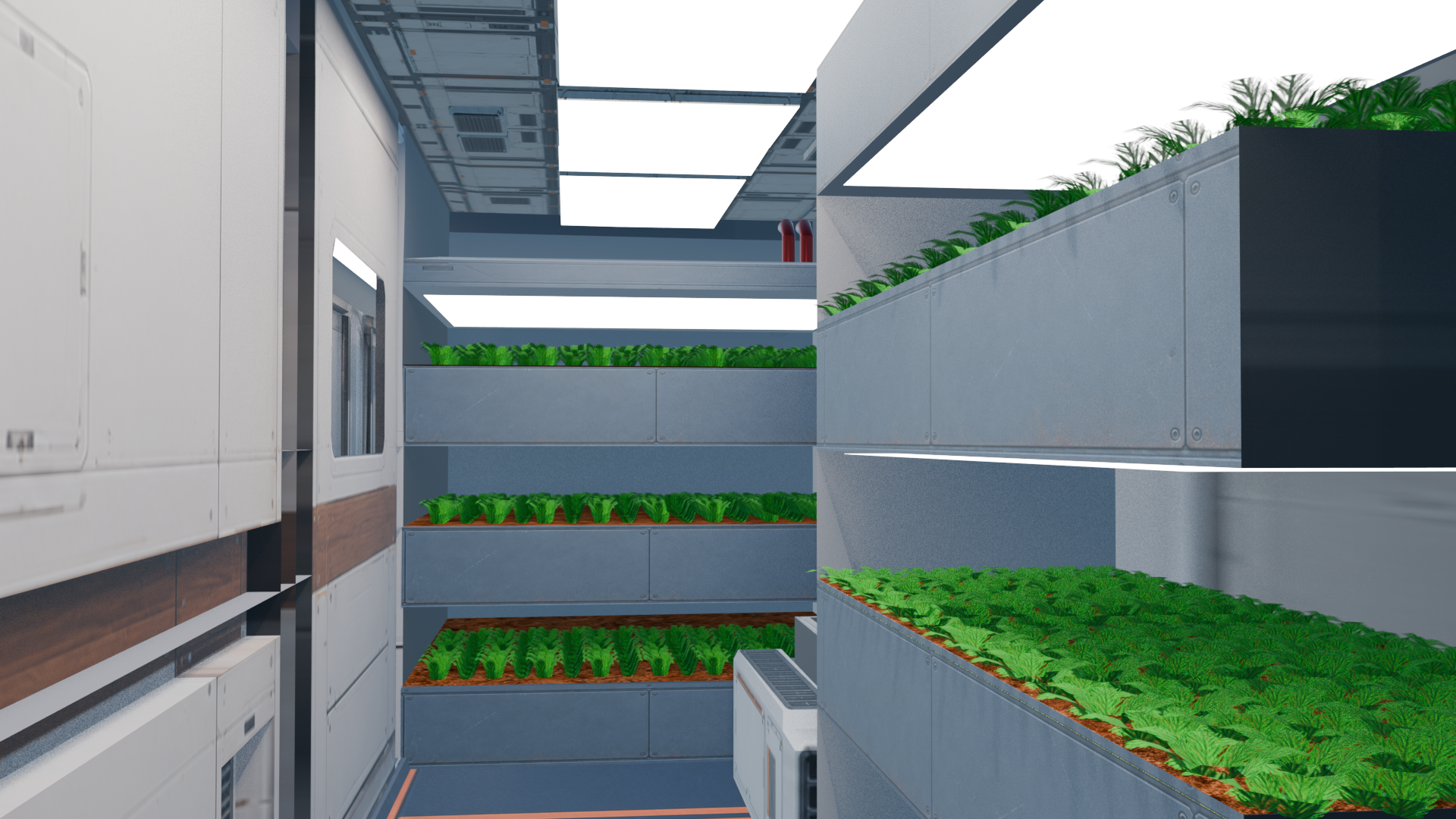
Science Lab Diagnostics & Specimen Bay
High-precision instrumentation for Martian astrobiology and mineralogy
A close-up view of the analytical benches, featuring automated pipetting machinery, sample vacuum chambers, chemical reagent containers, and computer diagnostic terminals.
Outpost Role: Secondary sample processing, mineral classification, and automated biological assays.
Expedition Relevance: SOL 3, SOL 6, and SOL 9 research procedures.
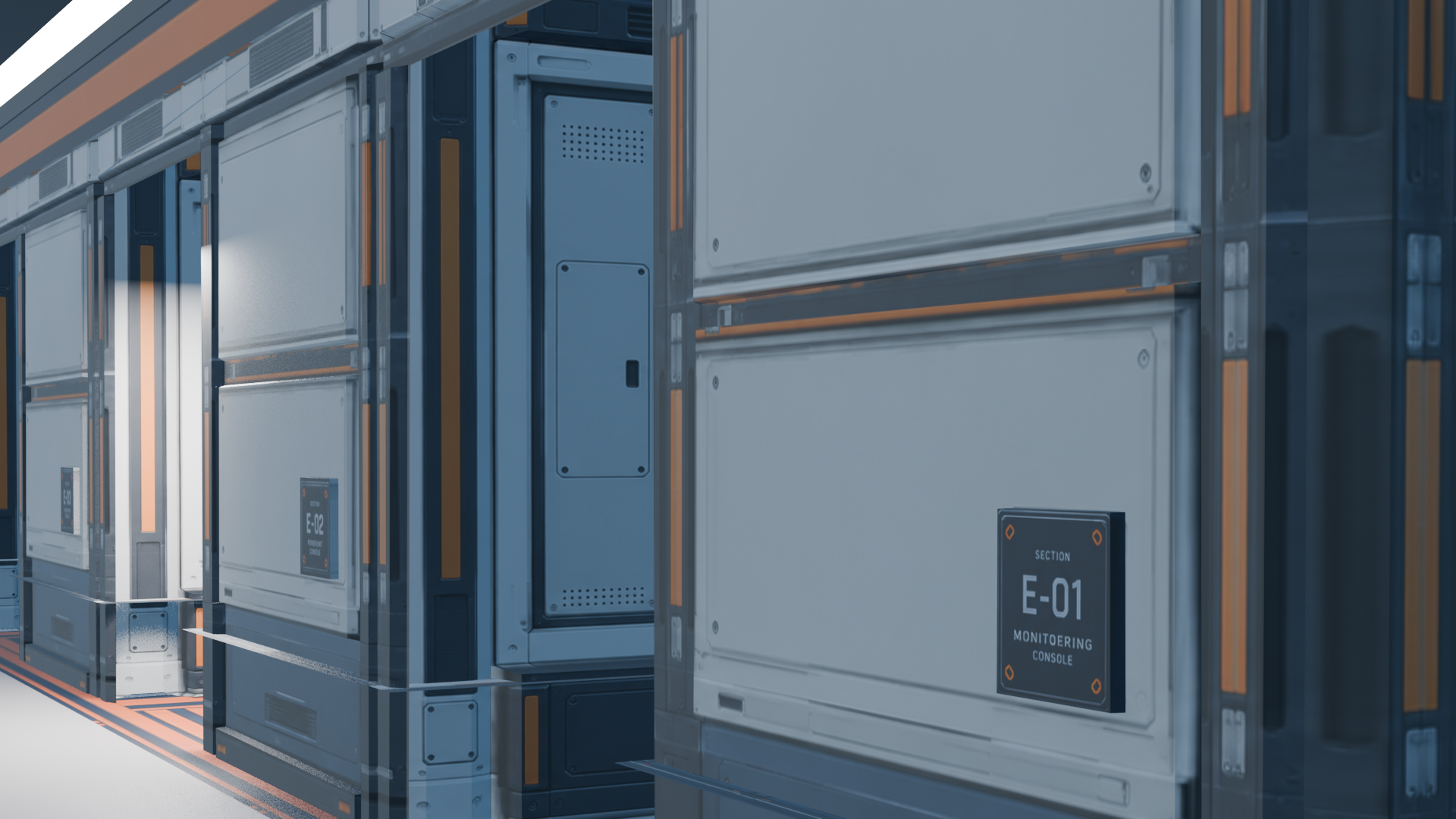
Engineering & Power Distribution Unit
Heavy-duty power management, atmospheric scrubbing, and life support machinery
The industrial powerhouse of PHOBOSIA. Contains the primary power transformers connected to external solar farms, CO2 scrubber banks, water reclamation pumps, electrical breaker arrays, and tool diagnostics benches.
Outpost Role: Power routing, life support maintenance, emergency bus switching, and hardware repair.
Expedition Relevance: Vital in SOL 2 readiness, SOL 4 drone prep, SOL 7 storm emergency, and SOL 8 power restoration.
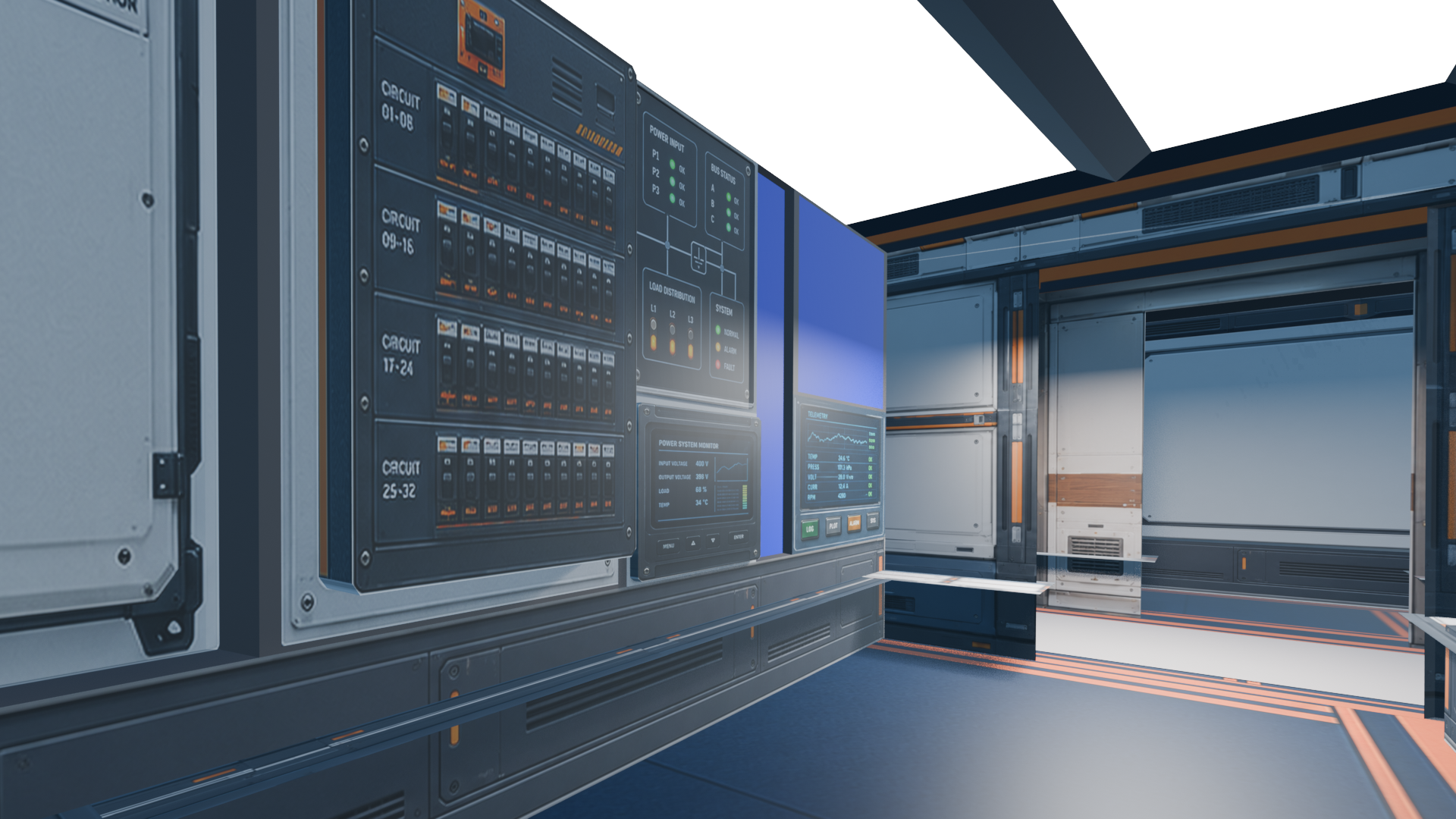
Engineering Diagnostics Workbench
Hardware diagnostic terminal and spare parts repository
An angled perspective showing the heavy-duty workbench, spare component drawers, oscilloscope terminals, and high-voltage conduit junctions.
Outpost Role: Component repair, avionics recalibration, and hardware troubleshooting.
Expedition Relevance: SOL 4 drone pre-flight preparation and SOL 8 electrical system repairs.
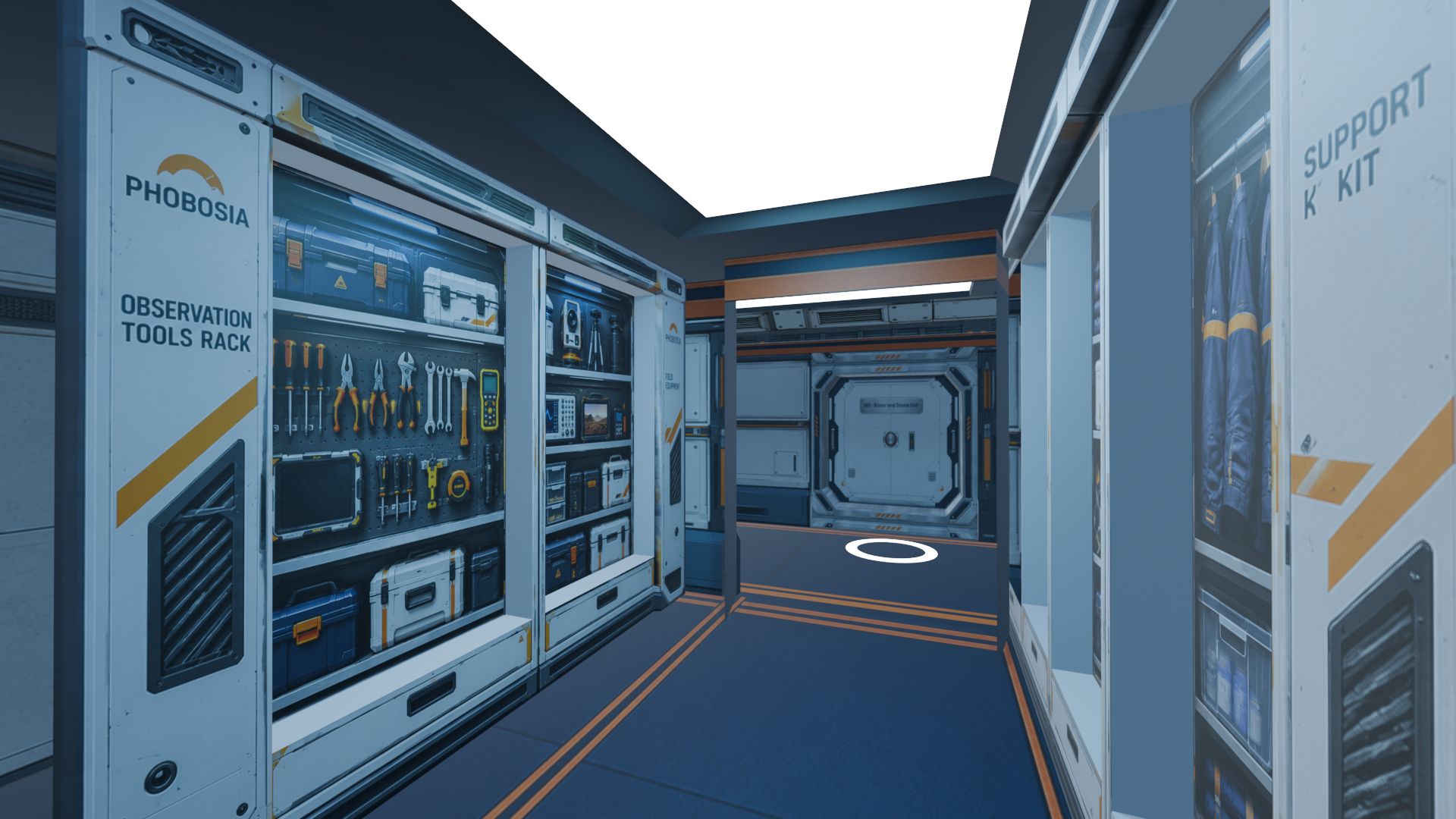
Airlock & Depressurization Chamber
The gateway between human warmth and the vacuum-thin Martian atmosphere
A dual-stage reinforced airlock chamber built to withstand the pressure delta between 101.3 kPa habitat pressure and Mars' ~0.6 kPa surface atmosphere. Features EVA suit docking ports, umbilicals, dust mitigation showers, and automated bulkhead doors.
Outpost Role: EVA suit donning/doffing, chamber depressurization, surface egress, and dust containment.
Expedition Relevance: Crucial for SOL 6 surface exploration, SOL 7 emergency lock-down, and SOL 11 departure.
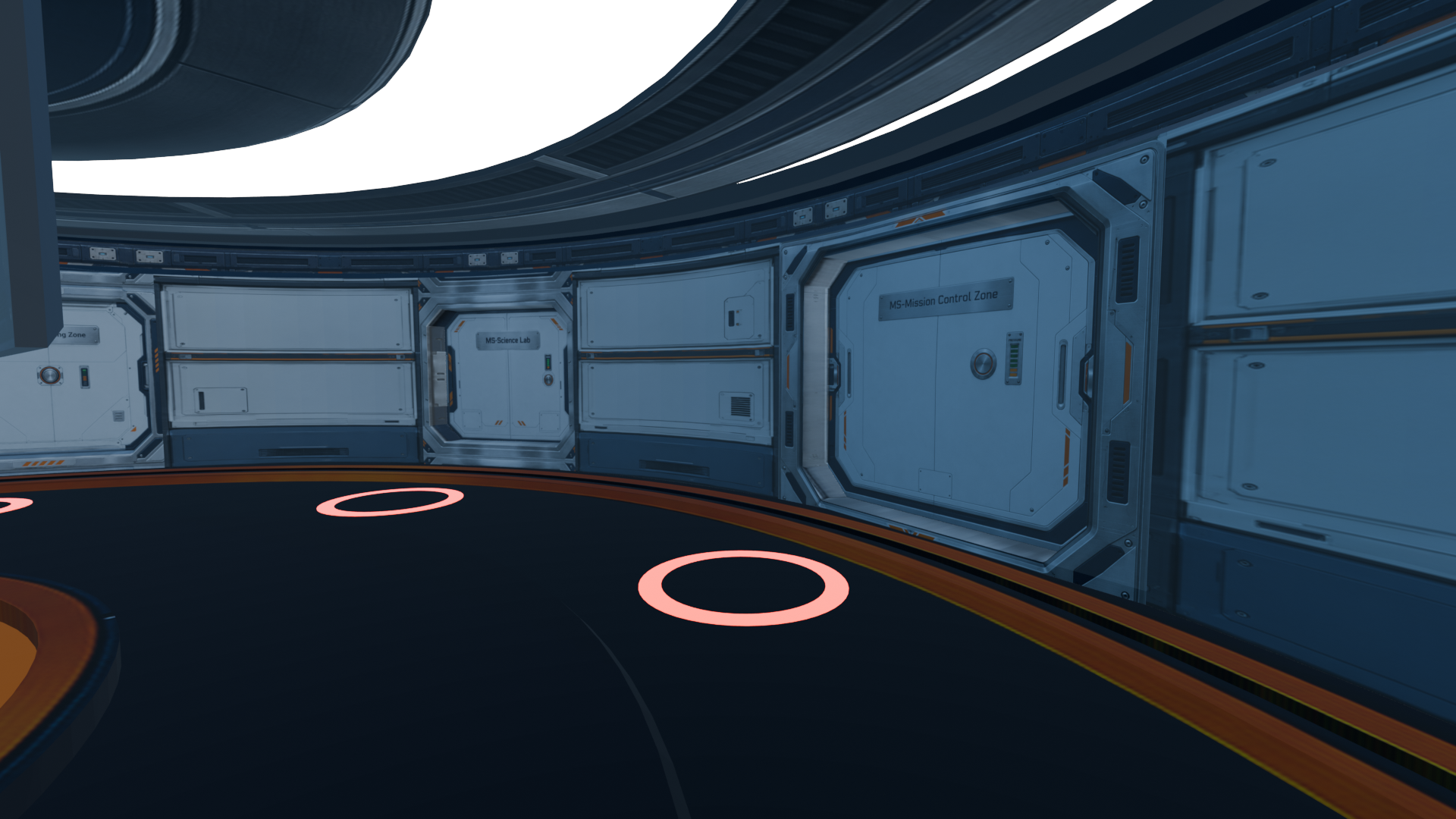
Central Hub & Corridor Array
The structural backbone linking all outpost modules
An octagonal central junction connecting the Habitat, Science Lab, Engineering Unit, Airlock, and Mission Control. Features overhead navigation signage, emergency bulkhead isolation doors, and circular acoustic dampening floor panels.
Outpost Role: Internal circulation, wayfinding, structural stabilization, and emergency section compartmentalization.
Expedition Relevance: Traversed continuously during all SOLs.
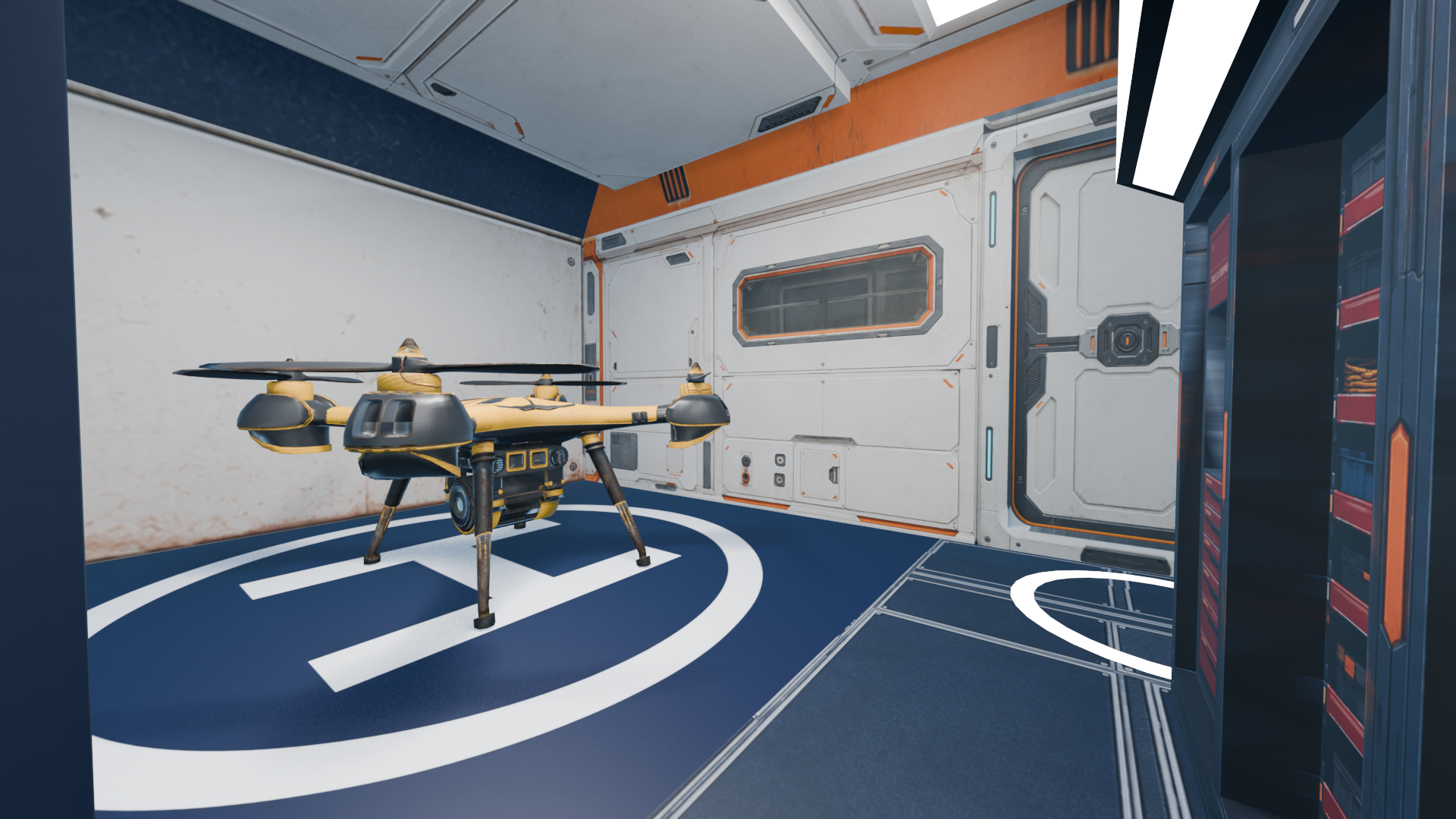
Aerial Reconnaissance Drone Bay
Dedicated deployment platform for Mars aerial exploration
The exterior-mounted drone hangar and maintenance gantry where the coaxial reconnaissance drone is stored, charged, and prepared for high-speed Martian atmospheric flights.
Outpost Role: Drone maintenance, telemetry uplink, pre-flight rotor calibration, and surface launch.
Expedition Relevance: Focal point of SOL 4 preparation and SOL 5 aerial reconnaissance flight.
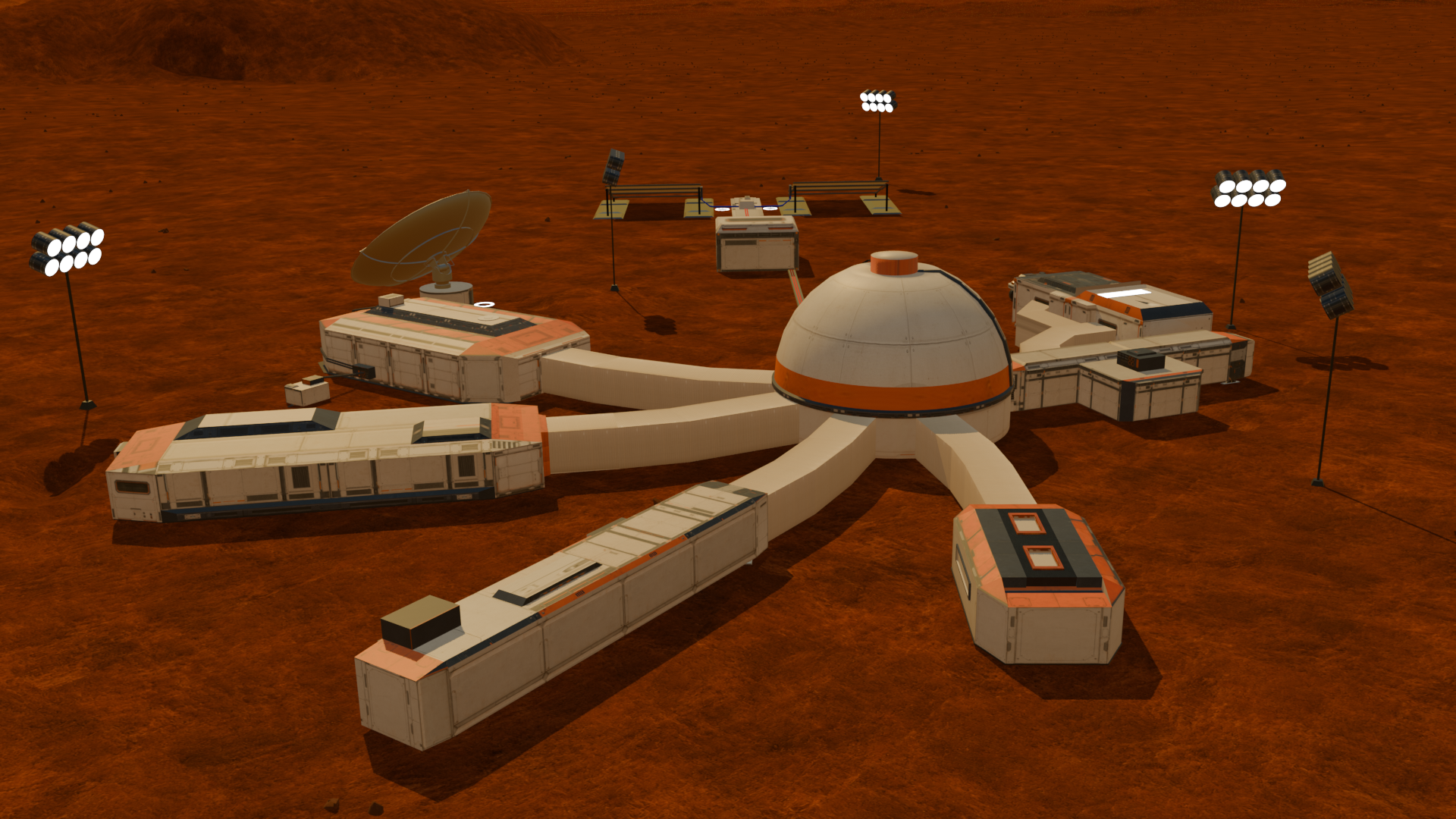
Mars_Outpost and Terrain
A resilient scientific outpost nestled in Elysium Planitia
A wide panoramic view showing the entire connected outpost complex set against the red Martian desert, rugged boulder fields, and distant crater rims under the dusty pink Martian sky.
Outpost Role: The complete habitat complex establishing human presence on the Red Planet.
Expedition Relevance: Visible during all outdoor phases, drone flights, and EVA missions.
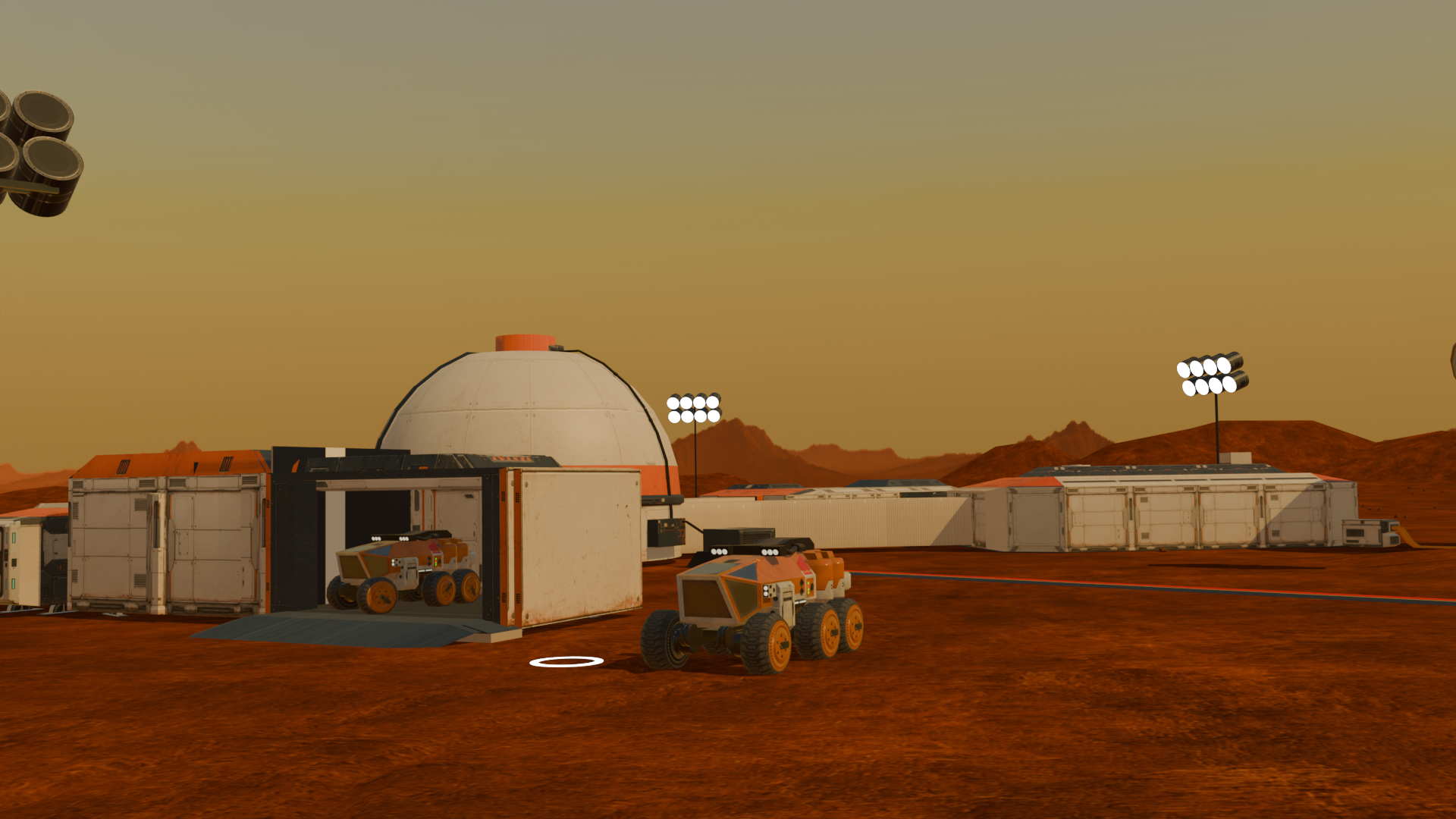
Aerial Outpost Architecture
Architectural layout showing modules, connectors, and solar farms
An elevated high-angle perspective showcasing the geometric harmony of the five interconnected modules, external utility piping, antenna towers, and protective regolith berms.
Outpost Role: Architectural overview demonstrating modular outpost scalability.
Expedition Relevance: SOL 5 aerial surveying and overall visual storytelling.
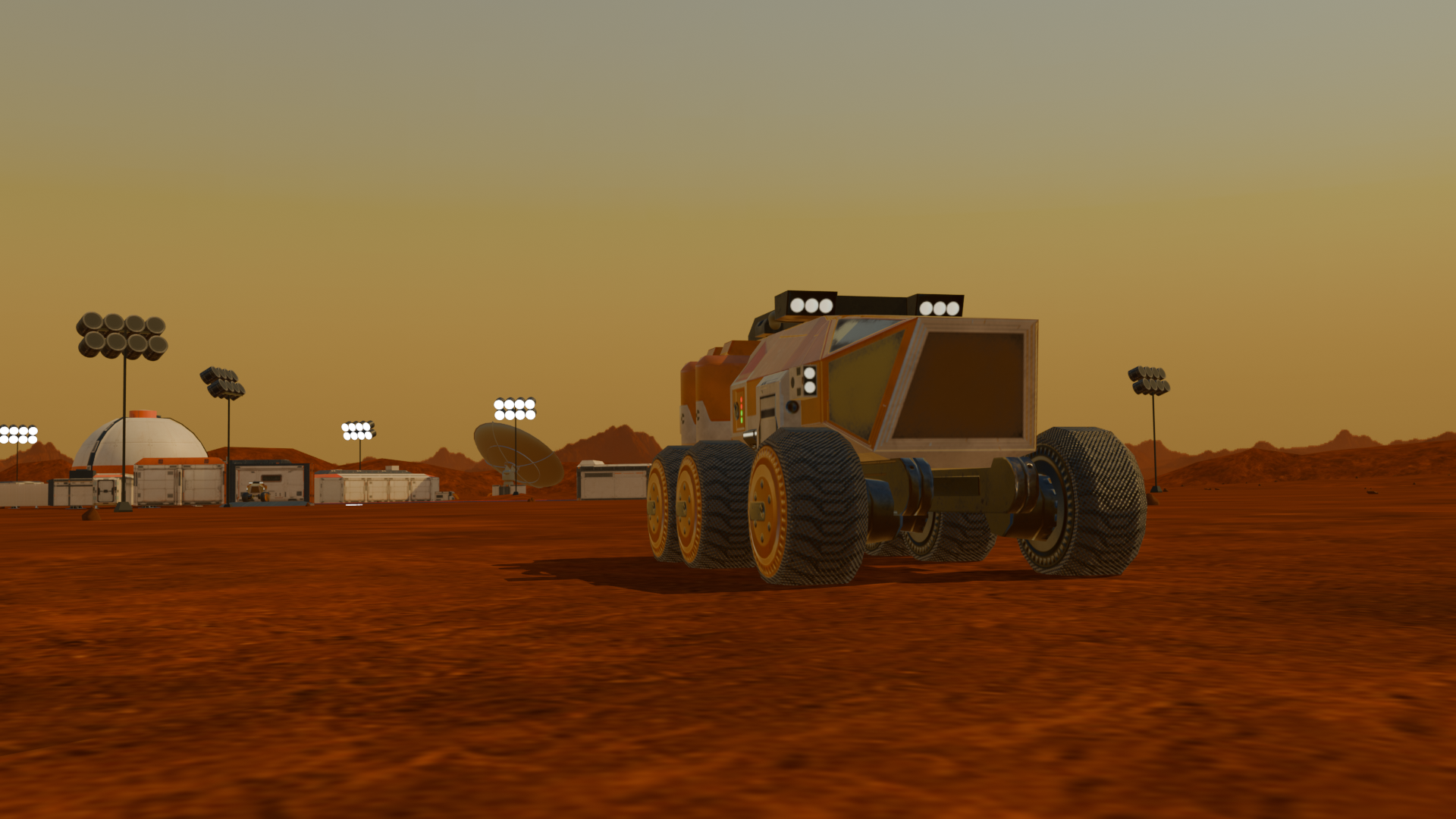
Outpost Yard with Terrain Vehicle
Surface exploration transport docked at the outpost yard
The exterior logistics zone showing the rugged six-wheeled pressurized Mars Terrain Vehicle stationed near the airlock ramp, ready for scientific field traverses and final expedition departure.
Outpost Role: Long-range surface transportation, heavy equipment transport, and departure craft.
Expedition Relevance: SOL 6 field mission context and SOL 11 final expedition departure.
3D Asset Credits & External Model Attribution
While the outpost architectural pods and terrain pipeline are custom-built, selected equipment props (such as the surface drone, terrain rover, and observation chairs) incorporate externally sourced 3D models.