
PHOBOSIA — A Journey Beyond Earth. An Experience of Mars.
A Journey Beyond Earth. An Experience of Mars.
An interactive 3D Mars exploration experience bringing a fictional Martian outpost, scientific planetary observation, and a comprehensive 11-day mission journey together in your browser.
Distinctive Engineering & Design
What Sets PHOBOSIA Apart
PHOBOSIA is neither a simple concept art gallery nor an oversimplified landing page. It is a fully implemented, browser-based Mars exploration simulation that bridges planetary science with game design.
Handmade 3D Outpost Architecture
Every module—from the multi-deck Habitat and Science Lab to the octagonal Central Hub—was custom-modeled in Blender from scratch specifically for the project.
Authentic NASA Planetary Data
Built upon real NASA HiRISE Digital Terrain Models (DTM) of Elysium Planitia, processed via Python GDAL into optimized, lightweight WebGL heightfields.
Complete SOL 1–11 Mission Arc
A coherent 11-day campaign with real mission JSON architecture, task validations, physical console systems, and scientific investigations.
First-Person Immersion & Physical Screens
Walk inside pressurized modules with genuine collision, press 'E' to operate 20+ functional screens, deploy drones, and board surface rovers.
Browser-Based 60 FPS WebGL Engine
Runs straight in modern web browsers without downloads or plugins, rigorously optimized with Draco compression and GPU instancing for modest hardware.
Scientific Integrity & Attribution
Clear transparency between empirical NASA elevation data, procedural surface synthesis, and creative storytelling elements.
Virtual Architecture
The 3D Martian Outpost
Engineered entirely in Blender and rendered in real-time WebGL. Explore the interconnected pressurized modules designed for long-term Martian survival.
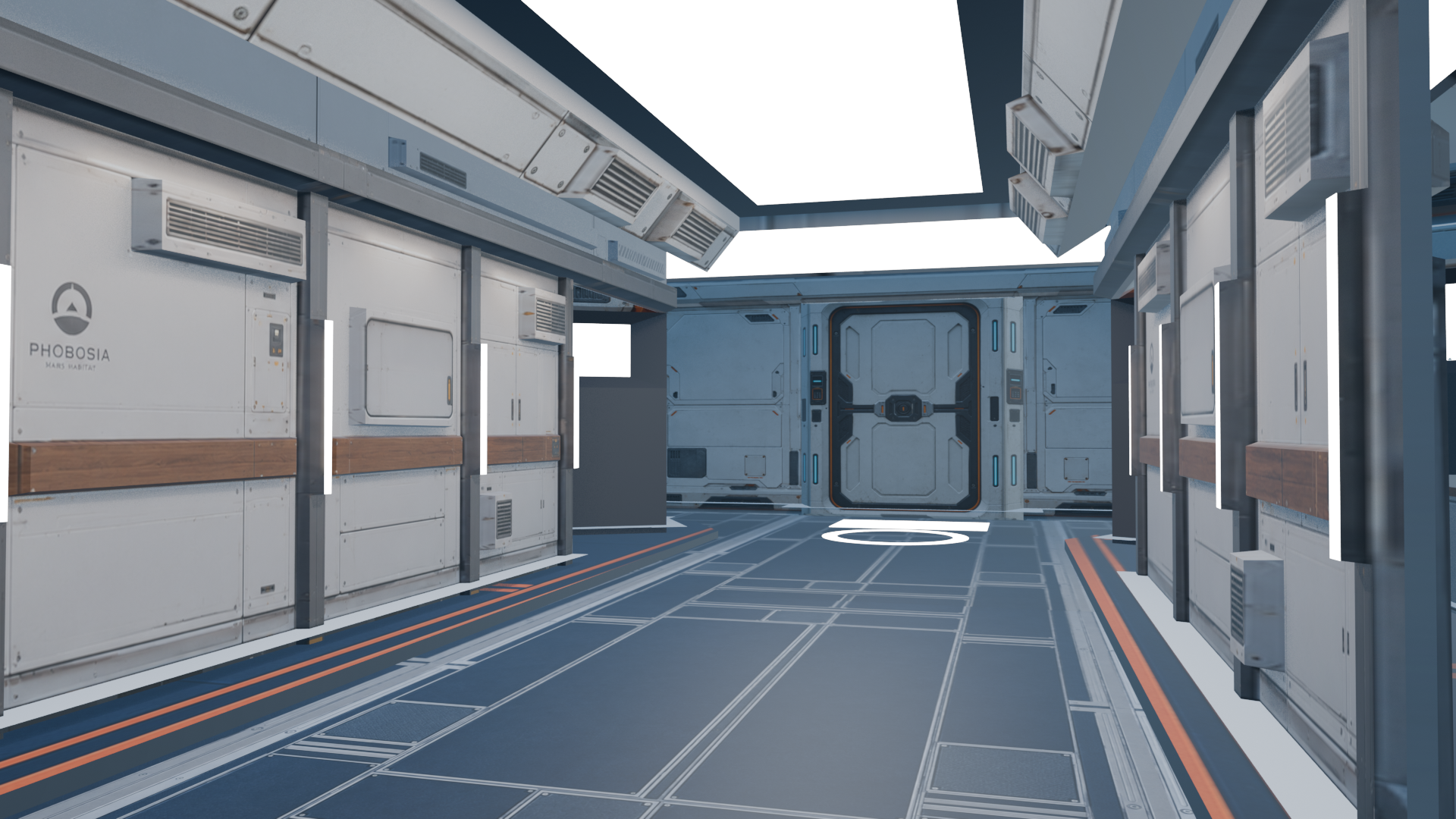
Mission Control Command Center
The central nervous system of PHOBOSIA Outpost
The primary nerve center housing multi-display telemetry banks, global orbital tracking projections, atmospheric telemetry readers, and long-range communication relays. Operators coordinate all outpost functions, communications, and emergency protocols from this pressurized hub.
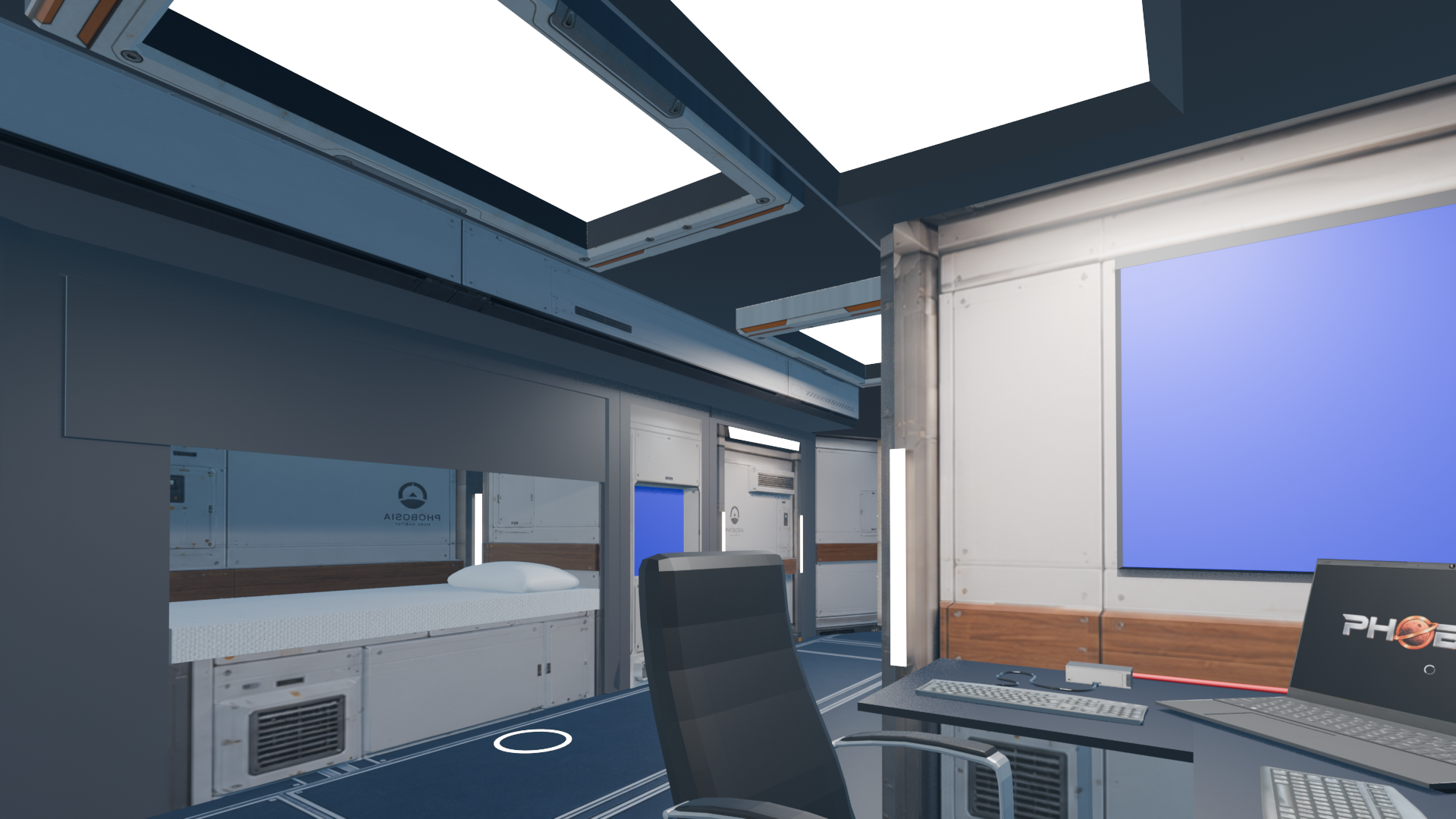
Crew Habitat Quarters
Ergonomic pressurized living environment for Martian endurance
The main residential sanctuary for the explorer, engineered to protect psychological well-being and physical health on Mars. Houses sleeping pods, nutrition dispensing systems, medical diagnostics, water recycling taps, and Carl's personal computing terminal.
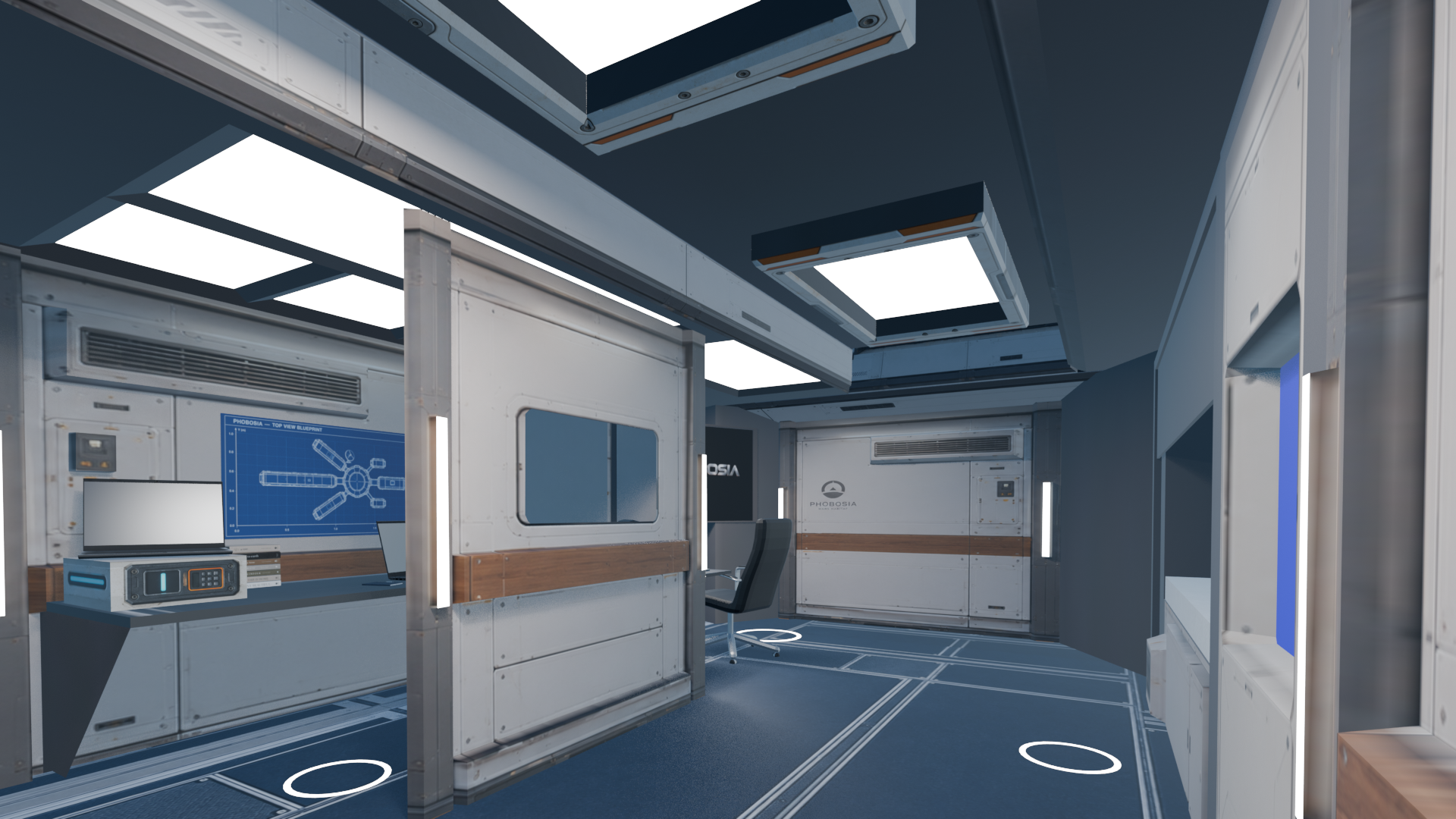
Habitat Workstation & Galley
Dedicated workstation and crew preparation area
An interior perspective of the Habitat module highlighting the crew desk, technical logbooks, nutrition distribution console, and environmental readouts.
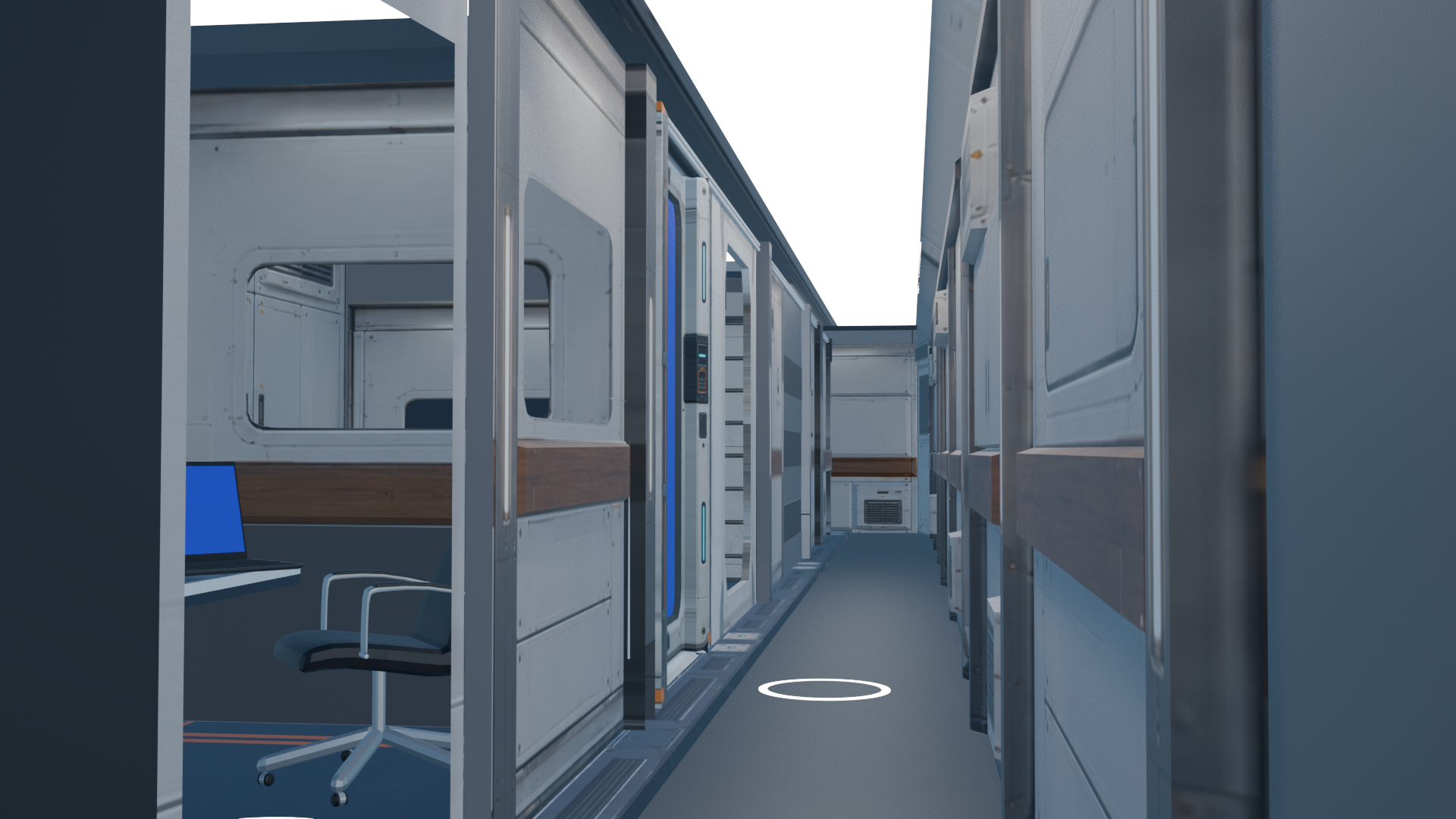
Research & Cultivation Science Lab
Planetary geology analysis and dual hydroponic plant cultivation
Equipped for rigorous planetary observation, geological sample analysis, and closed-loop biological cultivation. Contains twin pressurized botanical growth tubes, mass spectrometers, centrifuge equipment, and high-resolution microscopes for Martian regolith examination.
11-Day Expedition Campaign
The SOL 1–11 Journey
Every SOL features distinct operational goals, interactive consoles, and scientific activities. From initial habitat pressurization to drone surveys and interplanetary handover.
Base Orientation
Complete a basic base-orientation checklist by visiting/inspecting designated existing orientation points.
Scientific Target Selection
Use Mission Control and Science Lab interfaces to review available Mars observation sites, examine operational constraints, select a scientific target, evaluate available datasets, and submit a justified observation proposal.
Aerial Reconnaissance
Conduct an aerial reconnaissance mission over the previously selected observation target. Use the existing drone to inspect the target approach route, capture aerial evidence, and prepare observations for the ground investigation on Sol 6.
Mars Outpost Dust Storm Emergency Assessment
Respond to a Sol 7 dust storm by reviewing the alert and assessing each outpost section, power generation, reserves, distribution, communications, navigation, life-support and science availability. Preserve all prior Sol progress, target history, evidence, sample and cultivation records. This is assessment only; do not implement the three reserved Sol 8 repair triggers.
Final Farewell
The final day at PHOBOSIA Outpost. The player receives an incoming message from Selina, an astronaut who has departed from Deimosian Outpost and is travelling towards PHOBOSIA Outpost. Her journey will take several hours. The player does not wait for her arrival. After acknowledging the message, the player writes the final expedition log at Mission Control, prepares for the final EVA, collects the existing EVA suit, enters the assigned vehicle and follows a visible 200-metre departure route towards an unnamed outpost. The final route ends the playable outpost scene and triggers the mandatory final cinematic.
Detailed Breakdown of all 11 Mission SOLs
Inspect objectives, step-by-step task trees, screen inventories, and scientific outcomes.
Tactile Exploration
Physical Interaction Systems
PHOBOSIA eschews passive cutscenes. Players navigate the base in true first-person, trigger pneumatic airlocks, and operate hardware consoles.
First-Person Free Navigation & Collision
Seamless, grounded movement at eye-level (1.7m camera height) with realistic head bobbing, step audio feedback, and physical wall collision preventing clipping through airlocks or module hulls.
Physical Console Inspection & Trigger System
Pressing 'E' smoothly locks camera focus or opens dedicated high-resolution screen UI overlays displaying authentic telemetry, schematics, and interactive controls.
Personal Laptop OS & Crew Terminal
Players explore Carl's personal files, read mission directives, inspect planetary maps, and listen to archived audio dispatches through a stylized sci-fi computer interface.
Geological Spectrometer & Cultivation Consoles
Players input target coordinates, trigger sample centrifuges, analyze elemental peaks (Iron, Silicon, Magnesium), and balance nutrient pH for the hydroponic plants.
Grounded in NASA HiRISE & MOLA Topography
Rather than generic procedural mountains, PHOBOSIA uses genuine NASA Digital Terrain Models (DTM) derived from the High Resolution Imaging Science Experiment (HiRISE) onboard the Mars Reconnaissance Orbiter.
Empirical NASA Data
Elevation matrices, crater contours, regional slope gradients, and orbital reference coordinates derived from published NASA/JPL/HiRISE/MOLA data products.
Scripted Geological Synthesis
Micro-scale surface textures, sub-meter sand ripple waves, and rock scatter density synthesized algorithmically to reflect Martian regolith studies without inflating file sizes.
Fictional Narrative Setting
The PHOBOSIA Outpost structure, expedition storylines, Carl Ashwindu's character journey, and console interactive games are creative narrative elements designed to provide context for exploration.
Simulated Telemetry
Atmospheric pressure (0.61 kPa), oxygen levels, battery charge watt-hours, and greenhouse transpiration numbers are interactive gameplay simulations, not live Martian telemetry.
Target Region Coordinates

Osanda Hirushaka
Software Engineer & 3D Technical Artist • Sri Lanka 🇱🇰
Software engineer and 3D technical artist from Sri Lanka who conceived, custom-modeled, and programmed PHOBOSIA over ~2.5 months. Bridging computer graphics, geospatial data analysis, and web engineering.
Step Foot onto the Plains of Elysium Planitia
Discover the complete mission timeline, inspect high-resolution 3D models, and review the technical engineering behind the browser-based simulation.